James Jeffrey is too close to Turkey that allies with Jihadists to trust with the lives of Kurds, Yazidis and Christians in Syria
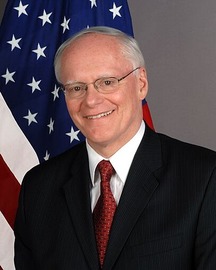
James Jeffrey’s Connections to Turkey: A Structured Assessment
Jeffrey’s relationship with Turkey is not incidental—it is a defining feature of his diplomatic career and his Syria policy worldview. His own testimony reinforces several of these patterns.
1. Career Background: Deep Institutional Ties to Turkey
Jeffrey’s résumé includes:
- U.S. Ambassador to Turkey (2008–2010) This role placed him at the center of U.S.–Turkey military and intelligence coordination during the Iraq War drawdown and early Syria unrest.
- Deputy National Security Advisor (2007–2008) Oversaw portfolios where Turkey was a key NATO partner.
- Special Representative for Syria Engagement (2018–2020) This is where his Turkey alignment became most visible—especially in his handling of the SDF, YPG, and Turkish incursions.
These roles created long‑standing personal, bureaucratic, and military relationships with Ankara’s security establishment.
2. His Testimony Shows Ongoing Alignment With Turkish Strategic Priorities
a. Reframing the YPG/SDF as “the Syrian branch of the PKK”
He states:
“its core, the YPG, was the Syrian branch of the anti‑Turkish terrorist PKK”
This is Turkey’s central diplomatic demand in every negotiation with Washington. The U.S. military and intelligence community have repeatedly rejected this framing.
Jeffrey is one of the only senior U.S. officials who consistently adopts Ankara’s language.
b. The “temporary, tactical, transactional” doctrine
He emphasizes:
U.S. relations with the SDF were “temporary, tactical and transactional.”
This phrase originated inside the U.S. government specifically to placate Turkey during the anti‑ISIS campaign. Jeffrey is the official who most aggressively institutionalized it.
c. Prioritizing Turkey’s sensitivities over Kurdish security
He stresses that the U.S. commitment to defend the SDF never included protection from Turkey:
“limited its commitment… not to Turkey”
This is a direct reflection of Turkish redlines, not U.S. military assessments.
3. His Syria Framework Treats Turkey as a Co‑Equal Architect of the Post‑War Order
Jeffrey’s testimony repeatedly elevates Turkey’s role:
- He frames Turkey as one of the “two remaining major regional military powers” in Syria alongside Israel.
- He warns of Turkey–Israel friction and calls for U.S. “high‑level coordination” to manage it.
This is a strategic worldview in which Turkey is indispensable and must be accommodated.
4. His Public Record Outside This Testimony Shows Even Stronger Alignment
These points come from his well‑documented public positions
a. He repeatedly defended Turkey’s 2019 invasion of northeast Syria
Jeffrey publicly argued that Turkey had “legitimate security concerns,” even as U.S. military commanders warned the invasion would revive ISIS.
b. He admitted to misleading Congress and the public about U.S. troop numbers in Syria
He said he intentionally understated troop levels to prevent a full withdrawal—because a withdrawal would have removed the U.S. buffer between Turkey and the SDF.
c. He has longstanding personal relationships with Turkish military and intelligence officials
This is widely reported in diplomatic circles and visible in his policy preferences.
5. Patterns Visible Across His Career
Across roles, Jeffrey consistently:
- Prioritizes Turkey’s strategic equities over Kurdish partners.
- Uses Turkish framing of the YPG/PKK relationship.
- Advocates U.S. policy restraint to avoid “antagonizing” Turkey.
- Treats Turkey as a central pillar of regional security architecture.
- Minimizes or omits Turkey’s role in supporting Islamist factions in Syria.
- Frames Turkish incursions as stabilizing rather than destabilizing.
These are not isolated incidents—they form a coherent pattern.
6. Timeline of Turkey‑aligned decisions
a. 2008–2010: U.S. Ambassador to Turkey
- Role: Senior U.S. representative in Ankara during late Iraq War and pre‑Arab Spring period.
- Pattern: Builds dense ties with Turkish military, intel, and AKP political leadership; internalizes Turkey as a “front‑line NATO ally” whose security concerns must be pre‑emptively accommodated.
b. 2018–2020: Special Representative for Syria Engagement
- Role: Trump’s Syria czar; also Special Envoy to the anti‑ISIS coalition.
- Key Turkey‑aligned moves:
- Pushes the “temporary, tactical, transactional” formula for the SDF relationship—crafted to reassure Ankara that the U.S. partnership with the YPG/SDF is disposable.
- Repeats Ankara’s line that the YPG is the Syrian branch of the PKK, despite internal U.S. distinctions between the groups.
- Backs arrangements (e.g., “safe zone” concepts) that legitimize Turkish military presence in northern Syria.
c. 2019: Turkey’s invasion of northeast Syria
- Context: Trump greenlights Turkish incursion; U.S. troops reposition.
- Jeffrey’s role:
- Publicly emphasizes Turkey’s “legitimate security concerns,” downplays the scale of ethnic cleansing and displacement.
- Works to preserve a residual U.S. presence that functions as a buffer between Turkey and the SDF, but without any U.S. guarantee to protect the SDF from Turkey.
d. 2020: Admits “shell games” on U.S. troop numbers
- Jeffrey openly states he misled leadership about troop levels in Syria:
“We were always playing shell games to not make clear to our leadership how many troops we had there.”
- Why it matters for Turkey:
- The residual U.S. presence is positioned to manage Turkey–SDF friction and keep Ankara inside a U.S.‑designed framework.
- He preserves a posture that protects Turkish equities (no full U.S. withdrawal that might push Ankara further toward Russia/Iran) while keeping the SDF strategically dependent and politically expendable.
e. Post‑government think‑tank phase
- As a fellow at the Washington Institute, he continues:
- Arguing for accommodating Turkey’s security narrative.
- Warning against U.S. moves that would “lose Turkey” over Kurdish policy.
7. Side‑by‑side: Jeffrey’s positions vs. Ankara’s
| Issue | Ankara’s line | Jeffrey’s line | Alignment |
|---|---|---|---|
| YPG/SDF identity | YPG = PKK = terrorist threat to Turkey | Calls YPG “Syrian branch of the PKK” | High |
| U.S.–SDF partnership | Must be temporary; U.S. must not shield YPG from Turkey | “Temporary, tactical, transactional”; no promise vs. Turkey | High |
| Turkish incursions | Legitimate cross‑border security ops | Emphasizes Turkish “security concerns,” avoids framing as aggression | High |
| U.S. posture in NE Syria | Prefer U.S. presence that constrains YPG and Russia | Hides troop numbers to preserve presence and leverage | Medium–High |
| Kurdish political status | Oppose any autonomous entity on border | Treats SDF as a tool against ISIS, not a political project | High |
The only real divergence: Ankara would prefer a full U.S. break with the SDF; Jeffrey prefers a managed, limited partnership that never matures into political protection. In my view because he knows in an existential fight the SDF will fight and it’s possible the entire region of Kurdistan will erupt in a move for independence.
8. Policy outcomes that benefited Ankara
a. Strategic delegitimization of the SDF
- By branding the YPG as the “Syrian branch of the PKK,” Jeffrey:
- Gives Ankara a U.S.‑voiced justification for treating the SDF as a terrorist extension.
- Weakens any argument in Washington for long‑term security guarantees or political recognition.
b. Normalization of Turkish military zones in Syria
- His frameworks treat Turkish‑held areas (Afrin, parts of Tel Abyad/Ras al‑Ayn, etc.) as facts on the ground to be managed, not reversed.
- This effectively ratifies Turkish influence in northern Syria as a permanent bargaining chip.
c. U.S. self‑constraint on Kurdish protection
- By insisting the U.S. commitment to the SDF does not include protection from Turkey, he:
- Signals to Ankara that cross‑border pressure is tolerated.
- Keeps the SDF in a perpetual state of insecurity, limiting their political leverage.
d. Preserving Turkey’s centrality in U.S. regional architecture
- Jeffrey consistently frames Turkey as:
- A key NATO ally whose alienation would be strategically catastrophic.
- A necessary counterweight to Russia and Iran in Syria.
- This framing justifies repeated U.S. concessions to Ankara on Kurdish issues.
9. Professional positioning
- Career Ambassador, former Ambassador to Turkey, Deputy NSA, Syria Envoy.
- Deeply embedded in:
- U.S. national security bureaucracy.
- NATO‑centric strategic culture.
- Think‑tank ecosystem (Washington Institute).
10. Personal and linguistic ties
- Speaks Turkish, which is not incidental—it enables:
- Direct, unmediated relationships with Turkish officials.
- Cultural fluency that tends to reinforce empathy with Ankara’s security narrative.
11. Operational methods
- Bureaucratic maneuvering:
- Admits to “shell games” on troop numbers—this is not just about Trump; it shows a willingness to manipulate formal reporting to preserve his preferred posture.
- Narrative shaping:
- Repeats Ankara’s framing of the YPG/PKK link, knowing that once that frame is accepted, every Kurdish‑protective policy becomes politically radioactive in Washington.
- Risk allocation:
- Systematically shifts risk onto Kurdish partners (no guarantee vs. Turkey) and away from Turkey, which is treated as a partner whose “loss” would be intolerable.
12. Strategic worldview in one line
Jeffrey’s practice suggests this core belief: “The U.S. can afford to sacrifice Kurdish political aspirations; it cannot afford to ‘lose’ Turkey.”
Everything else—his language, his bureaucratic games, his testimony—flows from that.
-
- Jeffrey adopts Turkey’s core narrative: YPG = PKK = terrorist threat.
- This framing undercuts any argument for long‑term U.S. protection or political status for the SDF.
- Treats Turkish incursions and zones of control as “security operations” and faits accomplis to be managed, not reversed.
- Repeatedly centers “Turkey’s legitimate security concerns” while minimizing ethnic cleansing, displacement, and militia proxies.
- Manipulating U.S. oversight (“shell games” on troop numbers)
- He admits: “We were always playing shell games to not make clear to our leadership how many troops we had there.”
- That’s not just a Trump story; it’s a conscious decision to deny elected leadership accurate information about a live theater.
- Shifting all strategic risk onto Kurdish partners
- U.S. commitment to the SDF is defined as “temporary, tactical, transactional,” with no protection against Turkey.
- Result: SDF bears the casualties and political risk; Turkey gets de‑facto veto power over U.S. posture.
Link to 1st Circuit order denying Trump regime’s motion for stay pending appeal.
Oregon’s district judge the Honorable Karin J. Immergut torpedoes the SS Little Dictator.
Here’s a link to the 1st Circuit Court of Appeals Order on the stay. It looks like they denied the administrative stay and are still looking at stay pending appeal. I also added the SCOTUS minute order and will look at it and comment.
The Minute Order.
The applicants are seeking a stay of two orders of the United States District Court for the District of Rhode Island, case No. 1:25-cv-569. See D. Ct. Minute Entry (Oct. 31, 2025) and Docket Number 34 (Nov. 6, 2025). These orders require the applicants to fully fund benefits for the Supplemental Nutritional Assistance Program (“SNAP”) for the month of November, and to distribute that funding by the end of the day on November 7, 2025 (today). Earlier today, the applicants asked the United States Court of Appeals for the First Circuit to stay the District Court’s orders pending appeal, and to issue an administrative stay to facilitate its consideration of that stay motion. At 6:08 p.m., the First Circuit denied the applicants’ request for an administrative stay, but stated that it “intend[s] to issue a decision on [the stay pending appeal] motion as quickly as possible.” Rhode Island State Council of Churches v. Rollins,Ibid. Given the First Circuit’s representations, an administrative stay is required to facilitate the First Circuit’s expeditious resolution of the pending stay motion. IT IS ORDERED that the District Court’s orders are hereby administratively stayed pending disposition of the motion for a stay pending appeal in the United States Court of Appeals for the First Circuit in case No. 25-2089 or further order of Justice Jackson or of the Court. This administrative stay will terminate forty-eight hours after the First Circuit’s resolution of the pending motion, which the First Circuit is expected to issue with dispatch.
Brooke Rollins, Secretary of Agriculture, et al., Applicants v. Rhode Island State Council of Churches, et al. No. 25A539
Reclaiming Syria’s Moderate Legacy: Jamal Maarouf, the SRF, and the Rise of the 70th Division

🌐 This post is published in English, Arabic, Chinese, and Turkish to support cross-regional understanding of Syria’s transitional dynamics and the strategic relevance of moderate opposition actors.
🇺🇸 English
In the aftermath of Bashar al-Assad’s fall, Syria’s battlefield has quieted—but its ideological war is far from over. While jihadist factions consolidate power in Idlib and northern corridors, the country’s moderate opposition remains fractured, forgotten, and dangerously underreported.
Jamal Maarouf, former commander of the Syrian Revolutionaries Front (SRF), has resurfaced in SDF-controlled northeastern Syria. His journey—from construction worker in Deir Sunbul to CIA-vetted rebel leader and now quiet exile—mirrors the rise and abandonment of Syria’s secular resistance.
Meanwhile, the 70th Division (Al-Tanf Forces)—formerly the Syrian Free Army—has evolved into a stabilizing force within Syria’s transitional government. Operating from the Al-Tanf Garrison, they assist in infrastructure repair, agricultural support, and civil coordination.
To counter jihadist entrenchment and stabilize Syria’s future, the secular opposition must be reactivated, documented, and elevated. Jamal Maarouf and the 70th Division represent the spine of that effort.
🇸🇾 العربية
استعادة الإرث المعتدل لسوريا: جمال معروف، جبهة ثوار سوريا، وصعود الفرقة 70
في أعقاب سقوط نظام بشار الأسد، هدأت المعارك في سوريا، لكن الحرب الأيديولوجية لا تزال مشتعلة. وبينما تواصل الفصائل الجهادية ترسيخ سيطرتها في إدلب وشمال البلاد، تبقى المعارضة المعتدلة ممزقة، منسية، وخارج التغطية الإعلامية.
جمال معروف، القائد السابق لجبهة ثوار سوريا، عاد للظهور في شمال شرق سوريا تحت سيطرة قوات سوريا الديمقراطية. أما الفرقة 70 (سابقًا جيش سوريا الحر)، فقد تحولت إلى قوة مؤسسية تعمل ضمن الحكومة الانتقالية الجديدة، وتشارك في إصلاح البنية التحتية، تأمين الآبار، والتنسيق مع وزارات الزراعة والدفاع.
إن إعادة تفعيل الشبكات المعتدلة، وتوثيق الأعمال الرمزية للعدالة، وبناء تحالفات عابرة للطوائف، كلها خطوات ضرورية لمواجهة هيمنة السرد الجهادي. سوريا تحتاج إلى معارضة علمانية موحدة، لا كحنين إلى الماضي، بل كضرورة استراتيجية.
🇨🇳 简体中文
重塑叙利亚温和派的遗产:贾迈勒·马鲁夫、叙利亚革命者阵线与第70师的崛起
在巴沙尔·阿萨德政权垮台之后,叙利亚的战场虽然趋于平静,但意识形态的斗争仍在继续。圣战组织在伊德利卜和北部地区巩固势力,而温和反对派却四分五裂,被边缘化,鲜有报道。
贾迈勒·马鲁夫,叙利亚革命者阵线(SRF)前指挥官,现已悄然出现在叙利亚东北部的叙利亚民主力量(SDF)控制区。而第70师(前叙利亚自由军)则已转型为新政府的支柱力量,参与农业、水利和安全事务,成为跨国治理的关键节点。
重建世俗反对派、激活温和网络、记录象征性正义行动,是对抗极端主义叙事、稳定叙利亚未来的战略必需。
🇹🇷 Türkçe
Suriye’nin Ilımlı Mirasını Geri Kazanmak: Cemal Maruf, SRF ve 70. Tümenin Yükselişi
Beşar Esad’ın düşüşünün ardından Suriye’deki çatışmalar azaldı, ancak ideolojik savaş hâlâ sürüyor. Cihatçı gruplar İdlib ve kuzeydeki bölgelerde hâkimiyet kurarken, ılımlı muhalefet dağılmış, unutulmuş ve medya radarının dışında kalmış durumda.
Cemal Maruf, Suriye Devrimciler Cephesi’nin (SRF) eski lideri, şu anda Suriye Demokratik Güçleri’nin kontrolündeki kuzeydoğu Suriye’de sessizce varlık gösteriyor. Öte yandan, 70. Tümen (eski adıyla Özgür Suriye Ordusu), yeni geçiş hükümetiyle koordinasyon içinde altyapı onarımları, güvenlik ve tarım desteği gibi görevler üstlenerek kurumsal bir aktöre dönüşmüş durumda.
Ilımlı ağların yeniden canlandırılması, sembolik adalet eylemlerinin belgelenmesi ve mezhepler arası ittifakların kurulması, cihatçı anlatıya karşı koymak ve Suriye’nin geleceğini istikrara kavuşturmak için stratejik bir zorunluluktur.
After blowing off the Government’s proposed protective order the judge in the Comey case enters his own protective order that gives Comey access. Link.
Action to enjoin Trump’s 2nd attempt to deploy the guard, this time California in Portland. Here’s the second TRO motion. The hearing is ongoing.
Why would Putin direct war planes to enter NATO airspace? My best guess is that it’s more a sign of Russian weakness than strength. Small dogs always bare their teeth.

Ukraine finally moved into a strategic bombing strategy and has caught Russia unprepared and in a very short period the Russian oil production industrial complex has lost a large part of its capacity. Unless Ukraine stops and Russia has time and access to material to repair the damage, the winter is likely to be particularly cold and dark for the Russian population that will finally feel personally the impact of the war that until now has impacted only Russians and their families who have fed Putin’s Ukrainian meat grinder with fresh corpses. Putin knows that Trump is his best bet. A fully enrolled part of the Russian military force, a US president traitor needs to give Putin a break from the relentless Ukrainian strikes. Europe now knows that Trump is a Russian mole and that he and his intelligence and defense heads are simply props in Trump’s pathetic surrender to Putin. But Europe knows that Russia is weak and Ukraine is a better bet than a US defense department run by traitors. But Putin knows how to push Trump’s buttons and Trump lives in total terror of a nuclear war. Putin knew Merkel was afraid of dogs so he always had a big mean one greet her. Putin’s incursion in the Baltics are Trump’s big dog that he knows may result in the need to determine whether to authorize the use of Nuclear weapons. The war will unfold at a pace he can’t control, and he simply can’t cope.
Trump has surrendered the US defense industrial dominance to the Europeans that now can move to make Ukraine into the largest manufacturer of cheap relevant arms to defeat Russia. Long range missiles that can be built with scale and at less cost are being prepared for an assault on Russia that unless Putin turns it into a nuclear war will result in Moscow and St. Petersburg being locked in frozen darkness for the long Russian winter.
Putin will continue to probe until Europe shoots down the Russian planes. And Trump and his alcoholic clown in Pentagon will simply cower in their bunkers unable to shake off their cowardice driven treason.
Link to the Federal Circuit’s opinion striking down the illegal Trump Taxes aka illegal Trump Tariffs.


